
Digital Marketing Tips to Boost Online Growth

Digital marketing tips for beginners can help you navigate the online world with confidence. Additionally, as a powerful tool for business growth, it enables brands to reach the right audience and build strong online visibility. However, getting started can feel overwhelming at first. For example, from SEO and social media to email marketing and content strategies, there are many beginner-friendly approaches to explore. In this guide, you’ll discover actionable tips to grow your online presence, attract customers, and succeed online.
What Digital Marketing Tips Beginners Should Know
Before diving into tips, it’s important to understand what digital marketing really is. In simple terms, it refers to promoting products or services through online channels such as search engines, social media, email, and websites. Unlike traditional marketing, it enables you to track results, reach a global audience, and engage directly with customers. For instance, tools like Google Trends can help beginners understand search demand and identify trending topics.
10 Actionable Digital Marketing Tips for Beginners
1.Define Your Digital Marketing Goals
Decide what you want to achieve with your digital marketing efforts — whether it’s brand awareness, generating leads, increasing sales, or driving website traffic. Set clear and measurable objectives so you can track your progress and adjust your strategy when needed.
2. Know Your Target Audience
Understanding your audience is essential for successful digital marketing. Research their age, interests, challenges, and online behavior. Create content that directly addresses their needs and provides real value.
3. Start a Blog to Improve SEO
Blogging is one of the most effective digital marketing strategies for beginners. It boosts SEO, drives organic traffic, and builds authority in your niche. Focus on long-tail keywords that match what your audience is searching for.
4. Learn Basic SEO Techniques
Search engine optimization helps your content rank higher on Google. Use keywords naturally in your titles, headings, and meta descriptions. Make sure your website is mobile-friendly and loads quickly.
5. Leverage Social Media Marketing
Choose one or two social media platforms where your audience is most active. Share helpful content consistently and engage with your followers to build trust and visibility.
6. Build an Email List
Email marketing remains one of the most powerful digital marketing tools. Offer newsletters or free resources in exchange for email addresses and use them to nurture leads over time.
7. Use Beginner-Friendly Marketing Tools
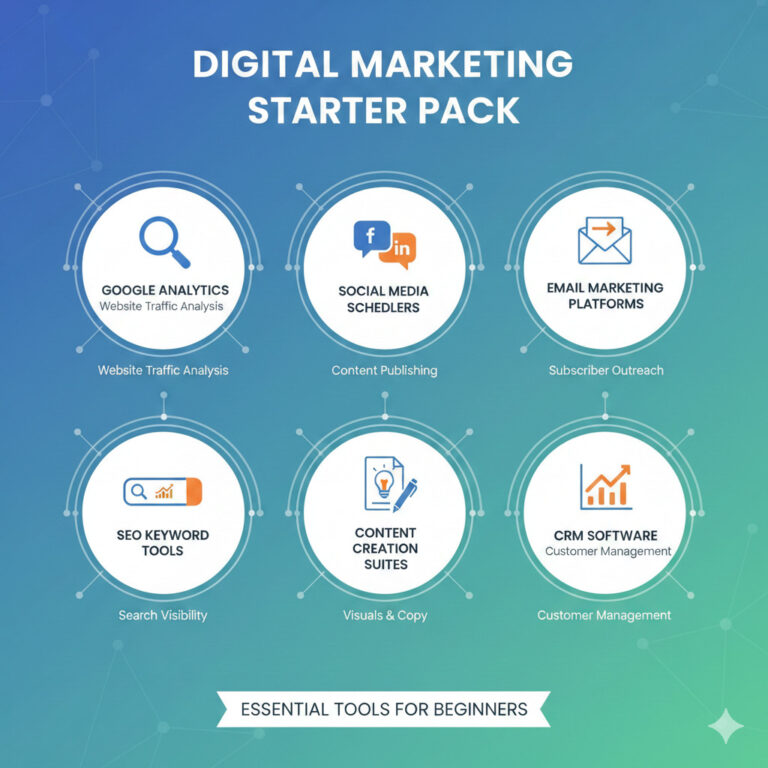
Free tools like analytics platforms, design software, and keyword research tools can simplify your digital marketing journey. They help you track performance and create professional content efficiently.
8. Repurpose Your Content
Maximize your efforts by turning blog posts into social media content, short videos, or infographics. Repurposing increases reach without requiring extra content creation.
9. Analyze and Adjust Your Strategy
Monitor website traffic, engagement, and conversions regularly. Reviewing your data helps you understand what’s working and improve your digital marketing strategy
10.Avoid Common Digital Marketing Mistakes
Avoid ignoring mobile users, stuffing keywords unnaturally, or spreading yourself too thin across too many platforms. Focus on consistency and steady improvement.
Related keywords: SEO tips for beginners, social media marketing tips, email marketing basics
Essential Digital Marketing Tools Every Beginner Should Know
Common Digital Marketing Mistakes for Beginners
1. Not Defining a Clear Target Audience in Digital Marketing
One of the biggest digital marketing mistakes beginners make is trying to target everyone. Without a clearly defined audience, your message becomes too broad and ineffective. Identify who your ideal customer is, understand their needs, and create content specifically for them. A focused strategy leads to better engagement and higher conversions.
2. Ignoring SEO Basics in Beginner Digital Marketing
Many new marketers overlook search engine optimization. Without proper keyword research, optimized headings, and quality content, your website may struggle to rank on search engines. Learning basic SEO techniques helps increase visibility and drive organic traffic to your site.
3. Posting Without a Digital Marketing Strategy
Random posting on social media or blogs without a plan rarely delivers consistent results. Successful digital marketing requires a content calendar, clear goals, and measurable objectives. A strategy ensures your efforts align with your business goals.
4. Not Tracking Performance in Online Marketing
If you don’t track your results, you won’t know what’s working. Tools like analytics platforms help you monitor website traffic, engagement, and conversions. Tracking performance allows you to adjust your digital marketing strategies for better results.
5. Expecting Instant Results in Digital Marketing
Digital marketing takes time and consistency. Many beginners give up too quickly when they don’t see immediate success. Building authority, trust, and visibility online requires patience and continuous improvement.
Conclusion
Digital marketing can feel overwhelming for beginners, but by following the actionable tips in this guide, you can confidently start building your online presence. First, define your goals, understand your audience, choose the right tools, and track your results carefully. With consistent effort, your work will pay off, and you’ll gradually notice growth in traffic, engagement, and conversions. For example, free tools like Google Analytics can help you monitor website traffic and performance effectively.
Next Steps for Beginner Digital Marketers
Start by defining your marketing goals and target audience. Clearly knowing what you want to achieve and who you want to reach is the foundation of any strategy.
Next, set up basic tools like Google Analytics to track traffic, Mailchimp for email campaigns, and Canva for designing visuals.
Then, begin creating content consistently for your blog or social media platforms. Consistency helps build authority and keeps your audience engaged.
After that, review your results weekly and adjust your strategy accordingly. Using your analytics data will help you see what’s working and what needs improvement.
Also, avoid common mistakes like ignoring mobile users, spreading yourself too thin, or neglecting your analytics.
Finally, if you want a full roadmap for growing your business, check out our Digital Marketing Strategy guide for a step-by-step approach.